

Blog
Harley Performance Upgrades: Which Parts Make the Biggest Difference?

Harley Performance Upgrades: Which Parts Make the Biggest Difference?
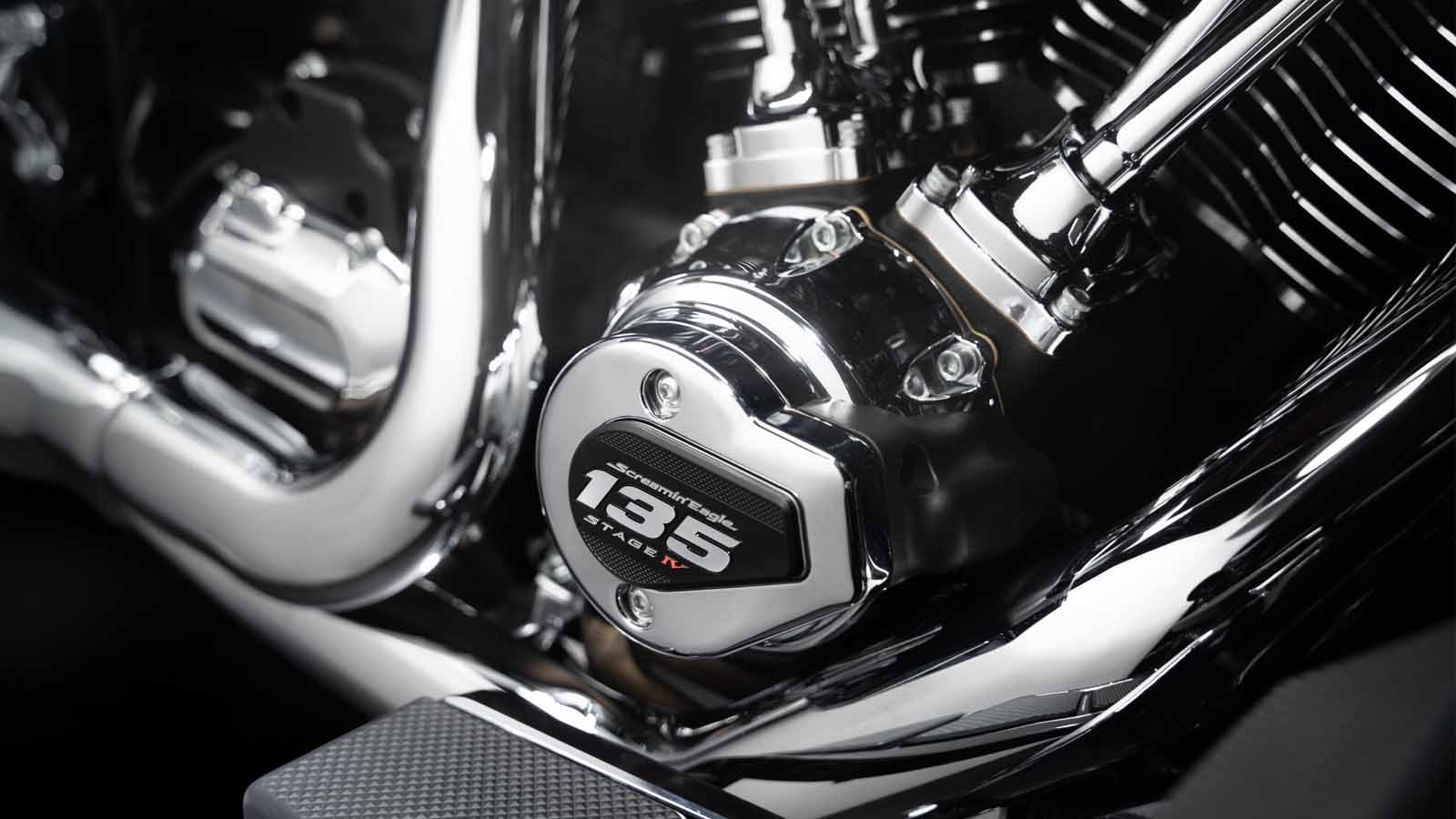
Not every Harley performance upgrade delivers the same type of improvement. Some parts focus on engine power, while others improve handling, braking, ride quality, or overall control.
If you are planning a Harley-Davidson performance build, knowing which upgrades can make the biggest difference helps you spend your budget where it matters most. This guide compares the main Harley performance parts and explains what each category can do.
What Makes a Harley Performance Upgrade Worthwhile?
A worthwhile upgrade should address a specific limitation or riding goal. More power may be the priority for one rider, while better suspension or braking may provide a bigger improvement for another.
Before buying parts, consider:
- What you want to improve
- How you normally ride
- Your motorcycle model and engine
- Your budget
- Compatibility with existing modifications
- Installation requirements
A balanced motorcycle is often more enjoyable than one focused entirely on engine output.
1. Engine Upgrades: Biggest Potential Power Increase
If your main goal is additional engine performance, major engine upgrades generally have the greatest potential to change how your Harley performs.
Depending on the motorcycle, options can include larger engine configurations, performance kits, cam upgrades, and other internal engine components.
These upgrades can also require supporting intake, exhaust, calibration, and drivetrain components.
When Engine Upgrades Make Sense
Consider a major engine upgrade if you want a substantial performance build and are prepared for the additional cost and installation requirements.
For a more detailed example, see our guide to the Screamin’ Eagle 135 kit.
2. Air Intake: A Practical Starting Point
An upgraded air intake can be a practical starting point for a Harley performance build. A high-flow intake can improve airflow and may complement other engine modifications.
It is particularly useful when combined with a compatible exhaust and appropriate engine calibration.
For riders who do not need a major engine build, an intake can provide a simpler way to begin upgrading engine performance.
3. Performance Exhaust: Sound and Engine Character
A performance exhaust can change your Harley’s sound, appearance, and engine characteristics. Depending on the system and application, it can also support airflow for a modified engine.
When choosing an exhaust, look beyond sound alone. Consider the motorcycle, engine configuration, existing intake, intended riding style, and applicable regulations.
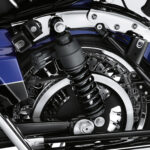
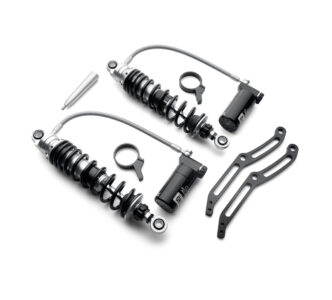
4. Suspension: One of the Biggest Handling Improvements
More horsepower is not always the upgrade riders notice most. A quality suspension setup can significantly change how a Harley feels on the road.
Suspension upgrades can improve:
- Cornering control
- Ride quality
- Stability
- Road feedback
- Control over uneven surfaces
This is particularly valuable on touring motorcycles carrying luggage or passengers.
Premium suspension manufacturers such as Öhlins and Legend offer performance-focused options for selected Harley-Davidson applications.
5. Tires: A Direct Connection to the Road
Tires influence acceleration, braking, cornering, stability, and wet-weather performance. Because they are the motorcycle’s contact with the road, their effect can be substantial.
Choose tires based on your actual riding conditions rather than simply selecting the most aggressive option available.
For touring riders, mileage, load capacity, highway stability, and wet-weather performance can be just as important as cornering performance.
6. Brakes: Performance You Can Feel
Improving braking performance can provide greater confidence, especially after increasing engine performance.
Depending on the motorcycle, brake upgrades may include:
- Performance brake pads
- Brake rotors
- Brake lines
- Other compatible braking components
Braking upgrades should match the motorcycle and should be installed according to manufacturer requirements.
7. Cam Upgrades: Change How the Engine Delivers Power
A performance camshaft can change the motorcycle’s power delivery and engine characteristics.
Different cam profiles can emphasize different areas of the powerband, so the correct choice depends on how you ride.
For a touring motorcycle, usable torque and mid-range performance may be more useful than a setup focused primarily on high-RPM output.
8. Calibration: Essential for Some Engine Builds
When engine hardware changes, calibration becomes an important part of the overall upgrade strategy.
Intake, exhaust, cam, and larger engine modifications can change how the engine operates. The appropriate calibration should therefore be considered alongside the hardware rather than treated as an afterthought.
9. Clutch and Drivetrain Upgrades
As engine performance increases, the drivetrain may experience greater demands.
Riders completing substantial engine builds should evaluate whether the existing clutch and drivetrain components are suitable for the new performance level.
This is less important for basic accessories or small modifications but becomes increasingly relevant as engine output rises.
Which Harley Performance Upgrade Should You Do First?
The answer depends on your main objective.
| Your Goal | Upgrade to Consider First |
|---|---|
| More engine power | Engine, cam, intake, or exhaust upgrades |
| Better handling | Suspension |
| Better road grip | Performance tires |
| Improved braking | Brake components |
| Better touring comfort | Suspension and touring-focused components |
| Complete performance build | Engine, intake, exhaust, suspension, brakes, and tires |
Best Performance Upgrades by Budget
Lower-Cost Starting Point
Riders with a limited budget can start with upgrades that target specific areas without rebuilding the engine.
Depending on the motorcycle, this could include tires, brake components, an air intake, or suspension improvements.
Mid-Range Performance Build
A mid-range build can combine intake, exhaust, calibration, suspension, and other supporting components.
This approach can provide noticeable improvements while avoiding the cost and complexity of a major engine build.
Major Performance Build
Riders looking for substantial engine performance can consider a larger engine configuration combined with supporting intake, exhaust, calibration, drivetrain, and chassis upgrades.
Our guide to the Screamin’ Eagle 135 kit covers one example of a major Harley performance project.
Performance Upgrades for Harley Touring Models
Touring motorcycles require a slightly different approach to performance upgrades. Riders often need a balance between power, handling, comfort, stability, and long-distance reliability.
Suspension, tires, brakes, intake, exhaust, and engine upgrades can all play a role.
For a more detailed touring-focused guide, read Best Performance Parts for Harley Touring Models.
Performance Upgrades for Road Glide
The Road Glide is a popular platform for performance and touring modifications. Riders can combine engine upgrades with suspension, braking, tire, and other motorcycle-specific improvements.
Before choosing parts, confirm compatibility with your exact Road Glide model and year.
You can also explore our guide to Harley Road Glide accessories for additional upgrade ideas.
Why a Balanced Build Matters
Adding horsepower without considering handling and braking can create an unbalanced motorcycle.
For example, a substantial engine upgrade may be more useful when paired with suitable tires, suspension, brakes, and drivetrain components.
The goal should be to improve the motorcycle as a complete system rather than simply maximizing one specification.
Common Harley Performance Upgrade Mistakes
Choosing Parts Without Checking Fitment
Harley-Davidson models can have significant differences between years and configurations. Always verify product fitment before ordering.
Focusing Only on Horsepower
More power is not the only measure of a better motorcycle. Handling, braking, suspension, and tires can have a major effect on real-world riding.
Ignoring Supporting Components
Major engine modifications can require supporting intake, exhaust, calibration, and drivetrain components.
Underestimating Installation Costs
Include labor, calibration, additional hardware, and other installation requirements when calculating your upgrade budget.
Installing Too Many Parts at Once
A staged approach can make it easier to understand how each upgrade changes the motorcycle and identify any compatibility issues.
How to Plan Your Harley Performance Build
Step 1: Identify Your Goal
Decide whether you want more power, improved handling, stronger braking, better touring comfort, or a combination.
Step 2: Assess Your Current Motorcycle
Record the model, year, engine configuration, current modifications, tires, suspension, and other relevant components.
Step 3: Prioritize the Biggest Improvement
Spend your budget first on the component that addresses your biggest performance limitation.
Step 4: Check Compatibility
Verify that every component is designed for your motorcycle and works with your existing setup.
Step 5: Plan Installation
Determine whether you can install the component yourself or need professional assistance.
Step 6: Evaluate the Results
After each major upgrade, evaluate the motorcycle before deciding what to modify next.
Where to Buy Harley Performance Parts
When shopping for Harley performance parts, choose products with clear specifications and model-specific fitment information.
HDMotorPartsStore offers genuine OEM and premium-quality aftermarket Harley-Davidson parts, performance components, and accessories for riders building and maintaining their motorcycles.
Visit the Harley-Davidson parts and accessories collection to explore available products.
Frequently Asked Questions
Harley Performance Upgrade FAQs
What Harley performance upgrade makes the biggest difference?
It depends on your goal. Major engine upgrades can make the biggest difference to power, while suspension, tires, and brakes can make a major difference to handling and control.
What should I upgrade first on my Harley?
Start with the area that matters most to your riding. If handling is the problem, start with suspension or tires. If engine performance is the priority, consider intake, exhaust, cam, or engine upgrades.
Are Harley performance upgrades worth the money?
They can be when the parts address a specific need. A planned build generally provides better value than purchasing modifications without considering compatibility or riding goals.
Should I upgrade suspension before adding engine power?
If handling or ride quality is currently limiting your motorcycle, suspension may be the better first investment. The ideal order depends on your riding style and priorities.
Do performance upgrades affect Harley reliability?
The effect depends on the parts, installation, calibration, and overall configuration. Quality components, correct installation, and proper maintenance are important for a performance-focused build.
Can I upgrade my Harley one part at a time?
Yes. Building in stages can make it easier to manage costs and evaluate each modification. Just make sure every new component remains compatible with the existing setup.
Final Thoughts
The biggest Harley performance upgrades are not necessarily the most expensive ones. The right modification is the one that solves your motorcycle’s biggest limitation and matches the way you ride.
Engine upgrades can provide substantial power increases, while suspension, tires, and brakes can transform handling and control. Intake, exhaust, and calibration can complement an engine-focused build.
Plan your upgrades as a complete system, verify fitment, and prioritize the improvements that matter most to you. That approach can help you build a faster, more capable, and better-balanced Harley-Davidson motorcycle.